Veterinary Radiology & Ultrasound in Kitchener, ON

Veterinary radiology and ultrasound at Chicopee Hills Animal Hospital in Kitchener, ON, help our doctors investigate health concerns in dogs and cats. X-rays are available on-site, and ultrasound examinations are provided through a visiting board-certified veterinary internist when referred by our veterinarians.
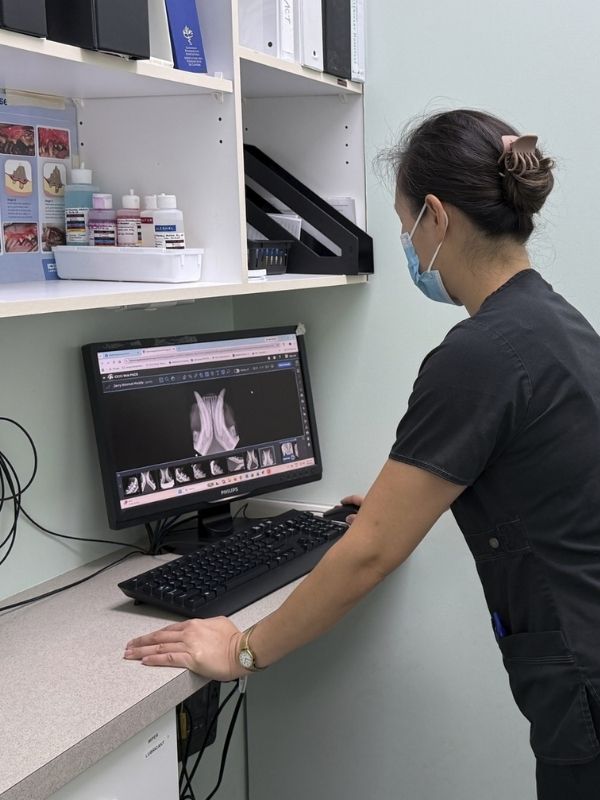
Shirley DVM Reviewing An Xray

What Diagnostic Imaging Can Show

Diagnostic imaging gives veterinarians a way to look inside your pet’s body without surgery. Radiographs, commonly called X-rays, can help assess bones and many internal organs. Ultrasound can provide more detailed information about soft tissues and may be recommended when advanced internal imaging is needed.
Bone Assessment
Radiographs can help evaluate fractures, arthritis, joint concerns, limb injuries, and other skeletal changes.
Chest Imaging
X-rays may be used to assess the heart, lungs, airway, and chest cavity when breathing or cardiac concerns are present.
Abdominal Imaging
Radiographs can help investigate the stomach, intestines, liver, spleen, bladder, kidneys, prostate, and reproductive organs.
On-Site X-Rays
Our hospital has radiology equipment on-site, allowing our team to take and process X-rays when medically indicated.
Ultrasound Exams
Ultrasound may be recommended for advanced evaluation of internal organs and soft tissue structures.
Guided Biopsies
When appropriate, ultrasound can assist with guided biopsy procedures performed by the visiting specialist.
Specialist Support

A board-certified veterinary internist visits regularly when a pet is referred by one of our veterinarians.

A person's hands gently petting a small white dog resting its head on a pink ottoman with a patterned throw blanket.

Radiology and Ultrasound Together

X-rays and ultrasound provide different kinds of information. Radiographs are especially useful for bones, chest evaluation, and certain abdominal concerns, while ultrasound offers detailed soft tissue imaging. Our doctors recommend the imaging method that best fits your pet’s symptoms, exam findings, and medical history.

Radiology

On-site X-rays help our veterinarians investigate bones, organs, injuries, and internal concerns in a timely way.

Ultrasound

Specialist ultrasound provides advanced soft tissue imaging when more detailed internal evaluation is needed.

When Imaging May Be Recommended

Our veterinary team may recommend imaging if your pet has limping, injury, coughing, breathing changes, vomiting, abdominal discomfort, urinary concerns, unexplained weight loss, or abnormal exam findings. Imaging may also be used alongside blood work, urinalysis, or other diagnostics to build a clearer picture of your pet’s health. You can view our full veterinary services for related care options.
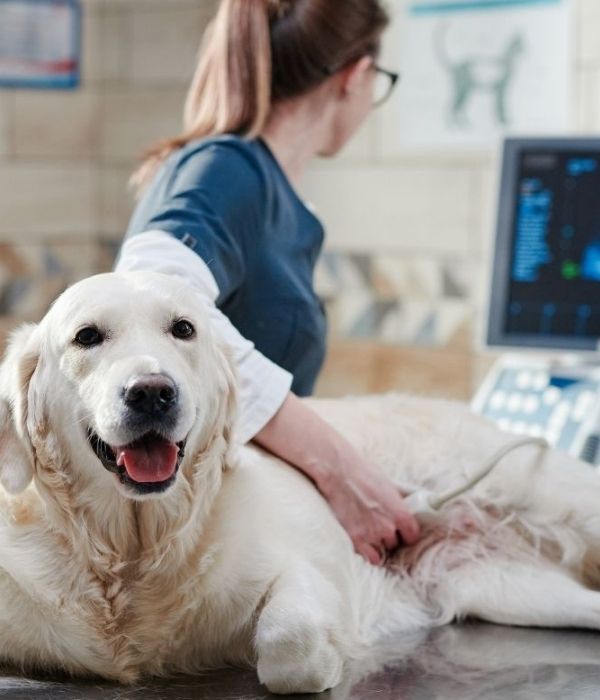
A retriever lies on an examination table while a veterinarian performs an ultrasound on its abdomen. The dog looks directly at the camera with its mouth open and tongue out.

Radiology and Ultrasound FAQs

These FAQs answer common questions about veterinary imaging at Chicopee Hills Animal Hospital. Diagnostic imaging helps our Kitchener veterinarians investigate symptoms, assess internal structures, and decide whether additional testing, treatment, monitoring, or referral support may be needed.

sparkles
What is the difference between radiology and ultrasound?
Radiology uses X-rays to create images of bones, the chest, and some abdominal structures. Ultrasound uses sound waves to evaluate soft tissues and internal organs in more detail. Chicopee Hills Animal Hospital may recommend one or both depending on your pet’s symptoms and exam findings.
Does Chicopee Hills Animal Hospital have X-ray equipment?
Yes. Chicopee Hills Animal Hospital has radiology equipment on the premises, allowing our team to take and process X-rays when they are medically recommended. Radiographs can help assess bones and internal organs such as the heart, lungs, stomach, intestines, liver, spleen, bladder, kidneys, and reproductive organs.
Do you provide ultrasound in the clinic?
Although Chicopee Hills Animal Hospital does not own ultrasound equipment, a board-certified veterinary internist visits the hospital regularly when a pet is referred by one of our veterinarians. This allows many pets to receive advanced ultrasound examinations and guided biopsies at our hospital.
When might my pet need diagnostic imaging?
Your pet may need imaging after an injury, if they are limping, coughing, vomiting, losing weight, having urinary problems, showing abdominal discomfort, or if an exam reveals a concern. Imaging helps veterinarians investigate what may be happening inside the body.
Will my pet need other tests with imaging?
Sometimes. Imaging provides important visual information, but blood work, urine testing, cytology, or other diagnostics may be needed to understand your pet’s full health picture. Chicopee Hills Animal Hospital may recommend combining imaging with laboratory testing when it supports better decision-making.